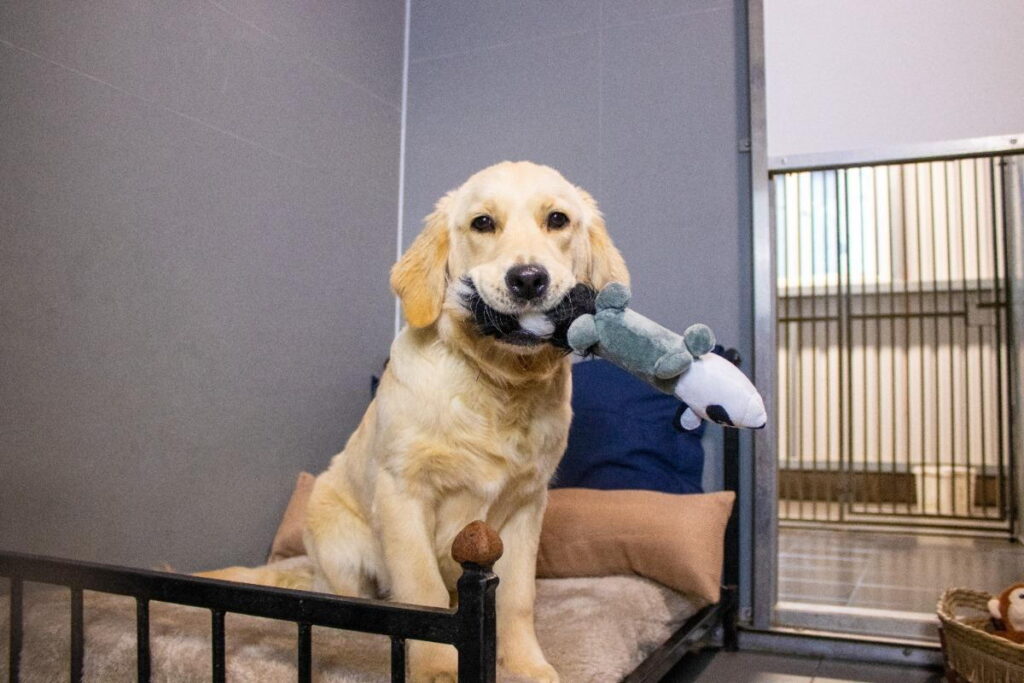

Preparing your dog before boarding helps alleviate anxiety by establishing familiarity and predictability before the separation. Careful planning will help the dogs perceive the dog boarding setup as orderly and secure rather than dangerous. When expectations are aligned between home and boarding, both dogs and caregivers find it easier to transition. Here’s preparing your dog for their boarding experience:
Visit Beforehand
A brief orientation session allows dogs to get to know hallways, yards, and kennels. These visits also include brief staff interactions in which the dogs become familiar with voices, movements, and handling styles. Controlled transitions begin to feel normal as dogs are dragged on leashes through entry gates.
Positive reinforcement during the visit helps establish familiarity and promotes calm, rewarding experiences. Startle responses gradually diminish with exposure to common boarding sounds, such as barking or cleaning equipment. Social acclimation is supported by visual contact with other animals without imposing direct interaction. Dogs leave feeling relaxed, and they carry that feeling with them after their visit to the dog boarding facility.
Practice Short Stays
Short-term placement with trusted caregivers recreates the overnight separation in a familiar, low-risk setting, which may help prepare your dog. The gradual buildup of time away is beneficial for emotional resilience and more predictable coping behaviors.
Regular departure signals can be used to reduce anxiety since they remove dramatic or disorienting signals. Independence is created when attention is balanced rather than being dependent on constant reassurance. Peaceful reunions strengthen emotional regulation rather than rewarding overstimulation. Monitoring adjustment patterns indicates gradual increases in confidence and recovery time.
Update Routines
Co-ordinated feeding patterns reduce gastrointestinal disturbances during changes into boarding conditions. Exercise at similar times helps dogs become accustomed to the expected regularity. Natural relaxation habits are easier to develop when rest periods match boarding downtime.
Structured play followed by rest reflects the normal cycles of daily boarding activities. Throughout routines, regular use of commands promotes predictability among various caregivers. Boardings are timed to avoid missed or late medications. Consistent habits over several weeks provide greater stability before boarding.
Pack Familiar Items
Bedding used at home brings homey smells to new sleeping rooms. Favorite toys provide emotional safety and habitual interaction during downtime. Worn garments provide familiar scent messages that alleviate the stress of separation.
Personal items are always accessible during the stay with clear labeling. Avoiding new things will reduce confusion or overstimulation prior to boarding. Familiar feeding implements keep things routine at food time. Before departure, contact with packed items strengthens comfort associations.
Reinforce Basic Commands
Reliability is enhanced through daily command practice during interactions with the caregiver. Practicing commands while the handler is distracted can improve responsiveness during boarding. Consistent use of verbal and visual cues across handlers minimizes misunderstandings.
Positive reinforcement sustains motivation by helping maintain behavioral confidence. Dogs are conditioned to regular care through gentle handling exercises. Positive session termination builds confidence rather than pressure-driven obedience.
Book Dog Boarding
Board preparation is centered on familiarity, consistency, and emotional regulation rather than on control or correction. Dogs develop confidence when they face predictable schedules and gradual exposure rather than uncertainty. On this basis, boarding stays become an extension of home rather than a source of disruption. Find a dog boarding facility to help you.