
Key Takeaways
- Practicing Tai Chi at home offers numerous health benefits, including improved balance, reduced stress, and enhanced cognitive function.
- Home practice offers flexibility, enabling individuals to conveniently integrate Tai Chi into their daily routines.
- Engaging in Tai Chi at home can be a cost-effective and accessible option, eliminating the need for specialized equipment or class fees.
Table of Contents
- Introduction to Tai Chi
- Health Benefits of Tai Chi
- Advantages of Home Practice
- Getting Started with Tai Chi at Home
- Overcoming Challenges in Home Practice
- Resources for Home Practitioners
- Conclusion
Introduction to Tai Chi
Tai Chi, a revered Chinese martial art, is characterized by its graceful, slow-flowing movements and purposeful deep breathing. Practiced by millions worldwide, it serves as a method of fostering harmony between the body and mind. Its gentle approach allows individuals of all ages and fitness levels to enjoy its restorative effects. For those interested in exploring tai chi in the comfort of their own space, options such as tai chi videos for home practice and learning have made it easier than ever to get started.
Rooted in philosophical concepts of inner balance and mindful motion, Tai Chi blends martial arts, medicine, and meditation. Each movement sequence is designed to create a sense of flow, cultivating greater energy circulation while reducing physical and mental tension. The accessibility of quality video tutorials and home study resources allows newcomers to experience this transformative mind-body practice on their own terms.
Health Benefits of Tai Chi
Consistent Tai Chi practice offers a wide array of health advantages that are supported by modern research and centuries of tradition. The practice is particularly celebrated for its impact on balance and coordination, which is especially beneficial in reducing falls and accidents among older adults. In fact, studies show that Tai Chi can reduce the risk of falls by up to 45% among seniors, highlighting its value as a preventive strategy for age-related injuries.
Mental well-being is another core benefit. The meditative aspect of Tai Chi encourages stress reduction, calming the mind and nervous system. Research has indicated that Tai Chi practitioners experience decreased anxiety, lower levels of depression, and increased self-confidence. Cognitive enhancements are also notable, with regular Tai Chi practice being linked to improved memory, executive function, and even delaying cognitive decline in older adults.
Chronic pain management is another area where Tai Chi excels. Clinical evidence supports its efficacy in controlling pain from fibromyalgia, arthritis, and other long-term conditions. A notable study published in the BMJ found that Tai Chi is more effective than conventional aerobic exercise in reducing symptoms associated with fibromyalgia.
Advantages of Home Practice
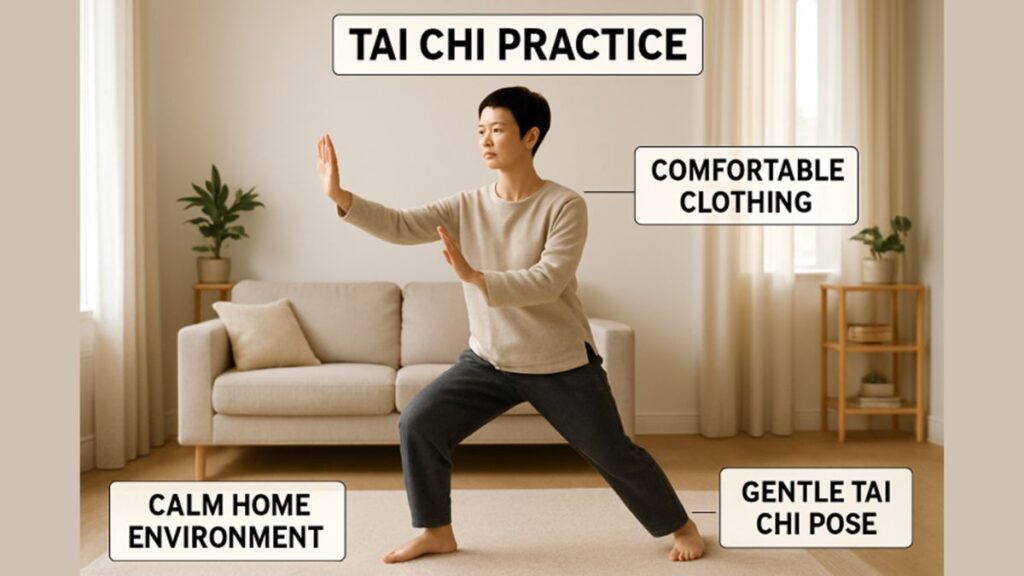
The flexibility of practicing Tai Chi at home is one of its most attractive features. People can tailor their sessions to fit their personal schedules, rather than adhering to set class times. This adaptability ensures that even individuals with busy or unpredictable routines can maintain a regular practice. At home, there’s no need for special equipment—comfortable clothing and a small space are all that’s required.
From a cost perspective, home practice removes the financial barriers that group classes or memberships might present. This opens access to a broader range of people, making Tai Chi an inclusive option for improved well-being. The comfort of one’s own environment also contributes to deeper relaxation, increased focus, and enhanced privacy, thereby improving the overall quality of each session.
Getting Started with Tai Chi at Home
Beginning a home Tai Chi routine can be both simple and rewarding with just a few practical steps. First, dedicate a clear, quiet area that allows for easy movement—the less clutter, the better —to foster an inviting space for your practice. Consistency is crucial, so establishing a regular time, even if only for a few minutes each day, is highly recommended.
- Use Guided Resources: Leverage platforms offering guided instruction through videos or live streams. Structured guidance can help new practitioners build a solid foundation, ensuring you learn postures and breathing techniques correctly and safely.
- Begin with Fundamentals: Focus initially on mastering basic stances and simple sequences, like the “commencement” movement or “grasp the bird’s tail.” With repetition, these postures naturally build strength and confidence, preparing you for more advanced forms as you progress.
Overcoming Challenges in Home Practice
Developing a consistent Tai Chi routine at home can present its own set of challenges, including flagging motivation and uncertainty about the form. To help stay on track, set achievable goals and consider keeping a progress journal. Virtual communities or online forums dedicated to Tai Chi can provide encouragement and accountability, simplifying the journey for solo practitioners.
Without an instructor’s immediate feedback, it’s important to pay extra attention to form. Using a mirror or recording practice sessions can be helpful tools for self-correction and ensuring safety. Additionally, dedicating a specific time and minimizing distractions—such as silencing mobile devices or informing others in your household—can significantly improve the efficacy of your sessions.
Resources for Home Practitioners
Numerous resources are available to help you continue learning and progressing in Tai Chi at home. Online streaming platforms offer instructional videos for every skill level, while digital and print books provide comprehensive step-by-step guides. Many organizations and instructors also offer live virtual classes, enabling real-time feedback and the sense of a communal experience even from home.
For those who enjoy structured content, established health sites and large publications often feature detailed articles, practice tips, and even video demonstrations of Tai Chi forms.
Conclusion
Practicing Tai Chi at home is a highly accessible and beneficial way to support your physical health and mental well-being. With its low barriers to entry and profound effects on balance, cognitive function, and stress reduction, it offers an ideal path for anyone seeking holistic health improvements without leaving their living room. Both beginners and experienced practitioners can rediscover their vitality and find peace through regular home practice of Tai Chi.